

Leeds is a large city in the county of Yorkshire and is home to over 800,000 people (Office of National Statistics, 2022). The metropolitan area of Leeds and West Yorkshire is one of the largest economies in the country. At the heart of this is Leeds, which has the largest financial sector in the country outside of London (Leeds City Region Enterprise Partnership, 2016). Over the past few years, the city has seen significant investment in the northern banks of the River Aire (the main river that flows through the centre). From major transport upgrades to large-scale luxury shopping centres and high-rise student accommodation towers, the past few years of investment have changed its overall appearance for the better.
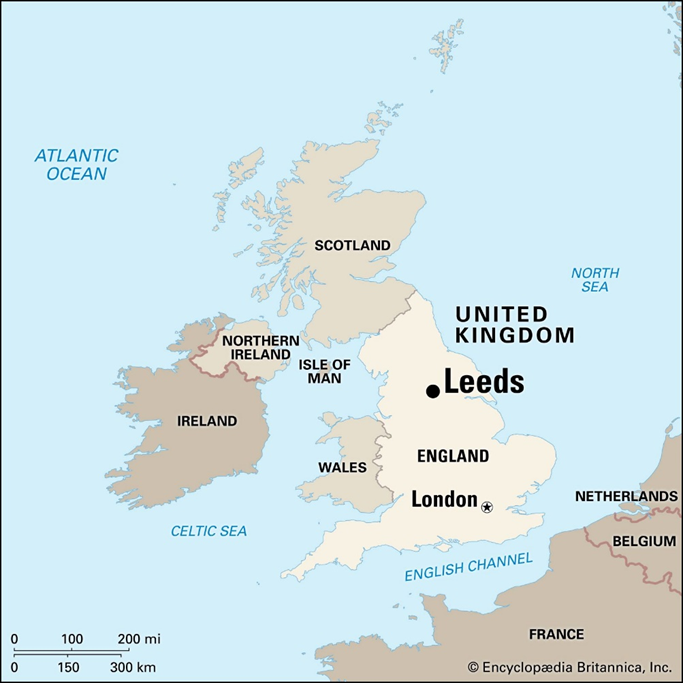
However, for many years, the south bank of the River Aire has seen little to no development. When it was announced that Leeds would have a large terminating station on the new HS2 (High-Speed Two) rail network, the council used this as a catalyst to encourage investment into the city, particularly in the South Bank region. Nevertheless, HS2 to Leeds was cancelled, making the South Bank investment less appealing. Yet, as of 2023, a major regeneration of the South Bank has begun, mainly led by the private sector using multiple types of regeneration, the main being regeneration of an overall area regardless of industry and cultural-led regeneration, but which is best?
What is cultural-led regeneration?
Cultural-led regeneration is when a town or city creates the conditions to attract new or improve existing industries. These industries congregate in certain locations in and around the city, which attracts highly skilled, educated young people to the city and, in turn, attracts tech and arts companies that are looking to employ these workers.
The ‘creative class’, as Richard Florida calls them, likes vibrant cities with a great atmosphere and nightlife, as well as high-profile universities and transport connections. In addition, the redevelopment or repurposing of old industrial or historical buildings is known to appeal to the creative class and businesses.
A great example of this would be the Battersea Power Station Redevelopment in London. This £9 billion mixed-use development aims to turn the famous abandoned power station into a large shopping complex with office space for some of the world’s biggest companies.

“WilkinsonEyre” (the company that designed the redevelopment) aims to use the power station as a catalyst for the surrounding area, which is also getting significant investment for new apartment blocks that are expected to house 25,000 people (Kollewe, 2022). However, WilkinsonEyre encountered many challenges during this project, particularly the building’s sheer age. The project director of Battersea Power Station, Sebastien Ricard, said, “There was an item list detailing over 60,000 repairs that needed to be carried out, all of which had to be thoroughly thought out due to the scale of the building.” (Ricard, 2022)
Examples for Cultural-Led Regeneration
Richard Florida, the author of the “creative capital thesis,” says that a community of creative and talented individuals can massively help a city attract investment and new developments. He also says that there are certain factors that some cities have over others that make them “creative cities.” (Florida, 2003)
First Direct Arena and the proposed conference centre
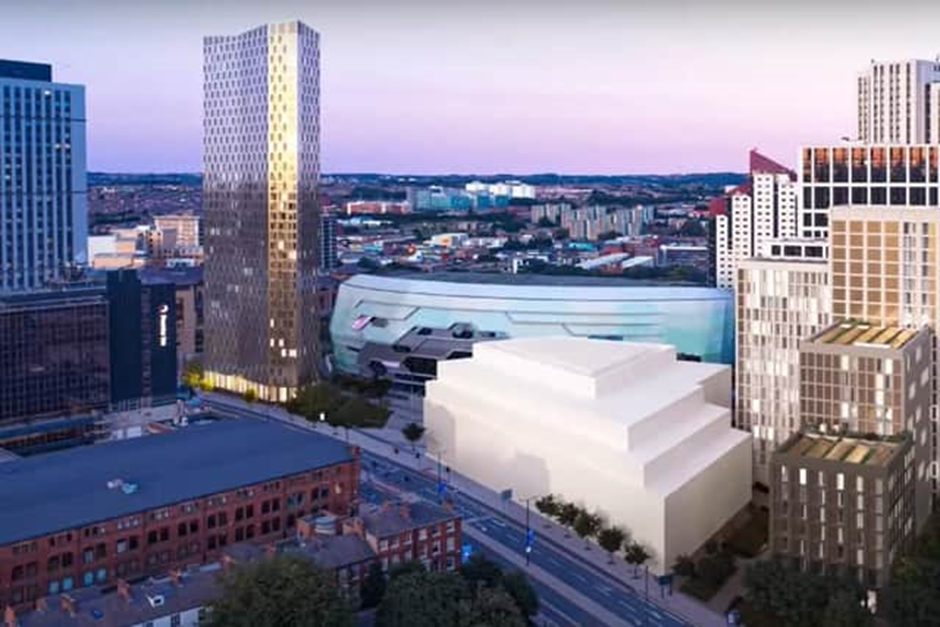
An example of cultural-led regeneration in Leeds is the First Direct Arena in the city centre. The arena was built in 2013 to make Leeds competitive with other cities in the region like Sheffield and Manchester, which both have their own indoor event arenas. Since its completion, the First Direct Arena has held many events, mainly music concerts from some of the world’s most successful artists.
Leeds City Council hopes to build on the success of the arena by constructing a new conference centre next to the First Direct Arena. This new development would allow Leeds to host business-to-business conferences and exhibitions for upcoming businesses. (Spereall, 2022)
The Majestic
The Majestic is an iconic building located in City Square in Leeds. The building is home to the national headquarters of Channel 4, which opened its new national headquarters on September 6, 2021. Channel 4 stated that about 200 of its 912 staff will initially work out of the Majestic. They also stated they would bring their 49-strong 4Studio team to the city. (Pidd, 2021) Leeds City Council hopes this move will act as a catalyst for the city’s creative industry. According to global property consultancy firm Knight Frank, rental prices for prime city centre commercial property are set to break records. Furthermore, the company’s head of development said the move had a “very significant knock-on effect” and has enhanced the city’s reputation as “a magnate for bright young tech, media, and creative companies. (Maclure, 2023)

Leeds is not the only city that has seen the effects of cultural regeneration. Manchester saw its dockland transform from an abandoned piece of land to one of the country’s largest media centres (MediaCity). The MediaCityUK redevelopment began construction back in 2007 and hoped to ignite new interest in the North of England and attract a wide variety of businesses, especially large media companies.
But has MediaCityUK worked out for Manchester? The answer to this is “yes”. In 2016, MediaCityUK announced it would invest around £1bn across 10 years in the area to further expand the region and encourage more growth in the area. The investment would see almost 2,000 new residential apartments built and an extra 540,000 square feet of high-quality office space made available. (RWinvest, 2023)
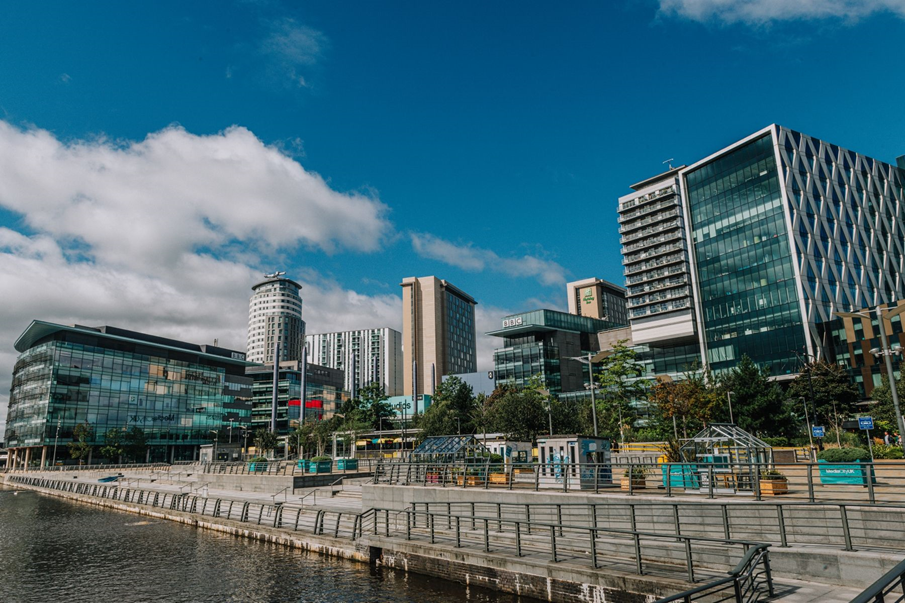
Now companies such as the BBC, ITV, and many more have regional headquarters in MediaCityUK. The BBC alone helped create more than 1,800 new jobs for the locals, as well as the added income from the 1,800 workers who relocated to the city as a result of the BBC’s decision to relocate a portion of the company’s operations out of London. (Manchester Evening News, 2012)
All of these projects build on Richard Florida’s emphasis on infrastructure attractions, such as sports stadiums and tourism and entertainment districts. He further states that cities that are doing their best to attract the creative class have an abundance of technology, talent, and tolerance. (Florida, 2003) These attributes can be seen in both Leeds and Manchester, which is one of the reasons the projects I talked about have been successful. Out of the four cultural-led regenerations, I believe that both MediaCityUK and The Majestic projects have had the greatest effect on their cities. This is a result of their size, both in terms of the scale of the project and the size of the company or business they attracted.
Examples against Cultural-Led regeneration
Jamie Peck argues that the idea of catering to the creative class makes other people who are not in this industry second-class residents. This diminishes and discourages other industries from starting or moving to an area that is going through cultural-led regeneration. (Peck, 2005)
One example of when cultural-led regeneration didn’t go to plan is the Millennium Dome in London. It was meant to be a grand project built in the UK’s capital to celebrate the new millennium. Over 6.5 million people visited the year-long Millennium Experience, but this was less than half of what was predicted. The project got to a point where there were even talks about demolishing it and moving it, as it was reported that the dome was costing the taxpayers £1 million per month to maintain. (Brown, 2023)

In December 2001, Meridian Delta bought the dome and surrounding land and started to turn it into the venue we know today. Now it is one of the most successful indoor arenas in the world and can hold up to 20,000 people, making it one of Europe’s largest indoor arenas.

Figure 7 shows how the £8 billion, 25-year-long regeneration project will look if all things go to plan. The project hopes to build on the newfound success of the O2 arena and build 17,000 new homes, two new schools, 48 acres of open public space, and 3,950 affordable homes.
This shows that it is not a given that you will attract the “creative class” when you build these new projects; you still have to pay attention to the cities/areas’ needs.
All of the previously mentioned examples have similar negatives, even the ones that have been successful. The negatives are:
- New housing raises house prices in the area, driving some residents out.
- Onsite construction jobs are often short.
- Not all new houses built are affordable.
- Increase traffic congestion.
- Increased pollution.
- Increased cultural diversity, causing tension between different cultures.
- Relocation of existing businesses and services as a result of the redevelopment.
Another aspect to consider is that cities that already benefit from cultural-led regeneration are already very successful. For example, the economic output of Manchester and Leeds is £74.85 billion and 62.5 billion, respectively. (Leeds City Region Enterprise Partnership, 2016; (Manchester City Council, 2023) This shows that they have already established economies, so do they need more investment, or should the capital for these investments go to other cities like Bradford or Hull?
My thoughts on Cultural-led regeneration
If your city has the right conditions for cultural-led regeneration to occur, I think it is overall a good thing. This is because when you slowly attract a more skilled and educated workforce, you will gradually increase the city’s overall attractiveness for other businesses in different industries. However, this method does not happen overnight and takes time for its effect to be felt.
Some would say that this “trickledown economics” does not work, therefore the idea of cultural-led regeneration is pointless as it only benefits the rich and not the lower classes. Furthermore, out of all the negative impacts of cultural-led redevelopment, I think the most concerning is the fact that many shops outside of the arts and entertainment industries are considered less important than the newer industries and companies moving in.
I do believe that cultural-led regeneration is beneficial for most cities that fit the criteria set out by Richard Florida. However, I also believe that cities should focus on developing the industries that are already present in them. An example of this would be Canary Wharf in London. This is not a cultural-led regeneration; yes, it did add a lot of value to the abandoned docklands that were an integral part of London’s success back in the industrial revolution. The development hoped to expand the financial district of London, which has been concentrated in the City of London and has, to a large extent, succeeded since many financial institutions relocated to Canary Wharf.
However, the point Jamie Peck makes about other industries becoming second-class businesses is also a real possibility and an idea that needs to be carefully watched if cities want to have a diverse economy.
Bibliography
Brown, M., 2023. A Brief History Of The O2, Or The Millennium Dome. [Online]
Available at: https://londonist.com/london/history/a-brief-history-of-the-o2-millennium-dome
[Accessed 8 May 2023].
Florida, R., 2003. City and Community. In: Cities and the Creative Class. 1st ed. s.l.:Routledge, 2005, pp. 3-19.
Kollewe, J., 2022. Battersea Power Station set for public opening after 10-year development. [Online]
Available at: https://www.theguardian.com/business/2022/oct/05/battersea-power-station-set-for-public-opening-after-10-year-development
[Accessed 7 May 2023].
Leeds City Region Enterprise Partnership, 2016. Leeds City Region Strategic Economic Plan. [Online]
Available at: https://www.lepnetwork.net/media/1119/leeds-city-region-sep.pdf
[Accessed 9 May 2023].
Maclure, A., 2023. Channel 4 Leeds: One year on from ‘moment of history’ when the news was broadcast from its new home in city. [Online]
Available at: https://www.yorkshireeveningpost.co.uk/arts-and-culture/film-and-tv/channel-4-leeds-one-year-on-from-moment-of-history-when-the-news-was-broadcast-from-its-new-home-in-city-4077254
[Accessed 8 May 2023].
Manchester City Council, 2023. Economy. [Online]
Available at: https://www.manchester.gov.uk/info/200088/statistics_and_intelligence/2162/economy
[Accessed 9 May 2023].
Manchester Evening News, 2012. Revealed: 3,172 Salford people applied for BBC MediaCity jobs – and only 24 were hired. [Online]
Available at: https://www.manchestereveningnews.co.uk/news/greater-manchester-news/revealed-3172-salford-people-applied-679921
[Accessed 8 May 2023].
Office of National Statistics, 2022. How the population changed in Leeds: Census 2021. [Online]
Available at: https://www.ons.gov.uk/visualisations/censuspopulationchange/E08000035/
[Accessed 10 May 2023].
Peck, J., 2005. Struggling with the Creative Class. International Journal of Urban and Regional Research , XXIX(4), pp. 740-770.
Pidd, H., 2021. Channel 4 opens hew HQ in Leeds as it fights against privatisation. [Online]
Available at: https://www.theguardian.com/media/2021/sep/05/channel-4-opens-new-hq-in-leeds-as-it-fights-against-privatisation
[Accessed 8 May 2023].
Ricard, S., 2022. Battersea Power Station, Heritage Approach, London: WilkinsonEyre.
RWinvest, 2023. MediaCityUK Plans to Double in Size as part of a £1bn Expansion. [Online]
Available at: https://www.rw-invest.com/manchester/mediacityuk-expansion-plans/
[Accessed 8 May 2023].
Spereall, D., 2022. Leeds conference centre at former Yorkshire Bank HQ gets green light despite Harrogate resistance. [Online]
Available at: https://www.yorkshireeveningpost.co.uk/news/politics/council/leeds-conference-centre-at-former-yorkshire-bank-hq-gets-green-light-despite-harrogate-resistance-3906984
[Accessed 10 May 2023].


+ There are no comments
Add yours