Overview
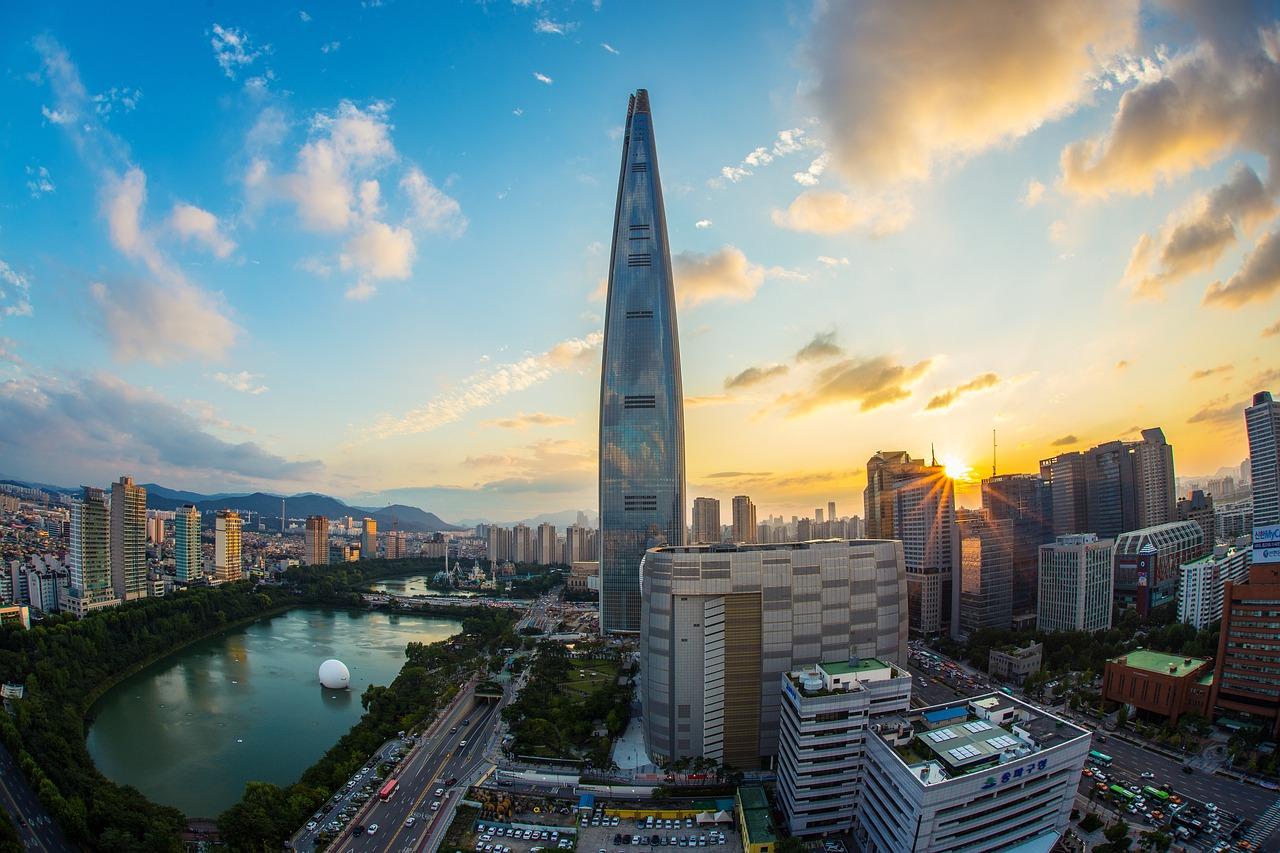
Seoul is the capital and largest city on the Korean Peninsula and in South Korea. Its population in 2021 is estimated to be around 9.47 million. Seoul is a well-developed city which is ranked as an “Alpha–“ city by The Globalization and World Cities Research Network (GaWC). This puts Seoul on par with other major cities like Bangkok, San Francisco, and Istanbul. (GAWC, 2020) In addition, the city is a large tourist attraction that saw over 9.1 million people visit in 2019 ranking it as the 23rd most visited city in the world. Like most cities in the world, Seoul has a rich history and a bright future that we will explore.
History
The city of Seoul can be traced back to the year 1394 when it went by the name ‘Han Yang’ and was chosen as the capital city of the Chosun Dynasty (Kim, 2009). In 1405 Han Yang ‘Seoul’ got its capital city status confirmed by the ruling leader at the time causing a mass migration into the city. Over the 19-year period between 1409-1428, the number of households in Han Yang increased from 11,056 to 18,522 (Ko, 2005). The Han River that flows through Han Yang offered great access to the central farmland of the country allowing for a quick journey to other coastal cities in Korea and the global food markets causing Han Yang to become a port city which helped it grow. It also made tax collection easier for the ruler at the time.
The city wall was built across the four inner mountains and at the corners of the city wall there were four great gates, two of which are national treasures today, they are Nam Dae Moon (the South Gate) and Dong Dae Moon (the East Gate). The area located inside the wall became modern Seoul’s CBD (Central Business District) and the political centre of Korea.
Han Yang was repeatedly damaged by war during its long history but, throughout all of this, it has remained the most important city in the Korean Peninsula. Between 1910 and 1945 the Korean peninsula was colonised by the Japanese Empire and in order for the Japanese to control the Korean economy the Japanese put a high priority on changing how the Korean people use the country’s land. They did this by “conducting land surveys, introducing the modern property right system, as well as reorganising land tax under the Governor-general of Korea.” (Chang, 1971)
At 4:00 am on the 25th of June 1950, the North Korean Army launched an all-out offensive on the South. Many of the world’s countries were against this invasion of an independent country and The United Nations Security Council called on its members to send support to the Republic of Korea. The American government quickly sent a portion of their armed forces to the Republic of Korea to help them defend themselves from the incoming threat. Soon after other countries like Great Britain, France, Canada, and many others sent troops to help. After around five months of pushing the North Koreans back the UN forces (along with the South Korean Army) approached within 40 miles of the Chinese border this caused alarm in Beijing leading them to join the war.
North Korea made another large push down south with the aid of the Chinese People’s Liberation Army leading to them capturing Seoul in 3 months. All the soldiers had to fight heavy snow, icy winds, and temperatures as low as -40⁰C. During the war 35,000 out of the 190,000 houses in Seoul were burnt to the ground and a further 20,000 were badly damaged (Son, 2003). Bombing continued to plague the city as large battles raged in the heart of the city as the two groups vide for control of Seoul. As a result of this large parts of the city were ruined by fires and pillaged by both armies. Eventually, a stalemate was reached and after over two years of static fighting an Armistice was signed on the 27th of July 1953. (National Army Museum , 2023)
After the war, a mass migration of people into the capital occurred as around 1.3 million had left during the Korean War. This sudden increase caused many problems for the city, some of which they are still trying to solve now some examples of this are a shortage of land, high housing prices and extensive property speculation. Seoul and South Korea spent the next few decades quickly industrialising and fending off the dictatorship ideology from its Northern neighbour.
The city in today’s society
As of 2017, Seoul had the 4th largest urban economy when measured against GDP-PPP at around $903 billion. (Florida, 2017) This means Seoul’s economy is larger than that of some countries such as Saudi Arabia and Thailand further cementing itself as an important city to the global economy. Furthermore, the Korean Stock Exchange is located in the Yeongdeungpo District of Seoul, which is the financial portion of the city, and has a market cap of $2.3 trillion making it the 16th largest stock exchange in the world just behind the Australian Securities Exchange and the 7th largest in Asia.
Relationship to nature.
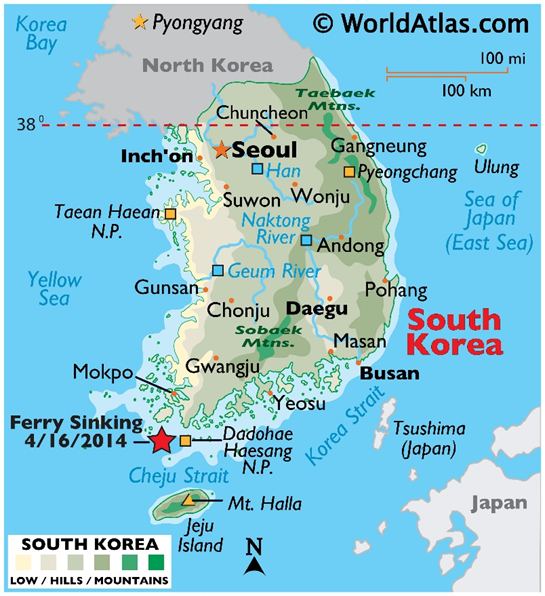
Power supply – Seoul does not have its own unique power-generating equipment to produce clean/green energy, it uses the Korean Power Grid. Figure 2 shows how South Korea generates its power and as you can see only 31% of South Korea’s electricity comes from renewable sources compared to 52% in the United Kingdom. Over the past decade, most countries have begun phasing out coal power generation as it emits 50 to 60 percent more CO2 than burning natural gas. (GAS vessel, 2020). Therefore, if Seoul wants to become a ‘greener’ city it will need to transition its electricity-generating capacity to a cleaner and greener one.

Recycling – Seoul produces more than 9,400 tons of household waste each day and even though a large majority of this is compostable, recycled or incinerated the remaining 9% (846 tons) goes to landfill to be buried out of sight. Around 90% of the total gas emissions from landfill sights are methane which causes greater enhancement to the greenhouse effect than CO2 because ‘The radiative efficiency of methane per unit concentration is relatively large, at least compared to carbon dioxide’ (Olivier Boucher, 2009). The city is home to four incinerator plants that both process about 23% of the city’s daily household waste. (Gibson, 2021) Over the coming years, the government hopes to increase the recycling capacity of the city and reduce plastic waste by 50% by 2030. (Hyun-bin, 2018)
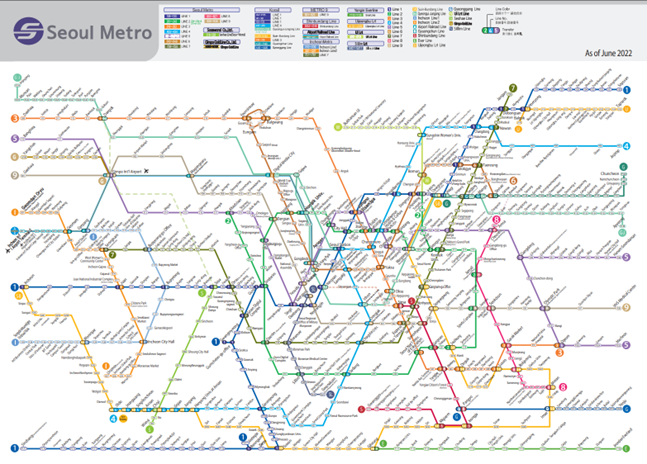
Public transport – Seoul has a very large public transport network with the Seoul Metro system being used by more than 7.2 million people each day (2.6 billion each year). This means fewer cars on the roads in and around the city. The Seoul Metro system has a 4.5/5 rating on TripAdvisor based on over 12 thousand reviews with many people talking about the cleanliness and frequency of the service.
However, with a large portion of the city’s power coming from non-renewable sources we can’t call this a clean mode of transport. Although the metro system will benefit the environment more than if the whole population was to use their own cars as the metro can move more people more efficiently and at a faster rate.
Compared to other cities of similar sizes Seoul is surrounded by large forest-covered mountains that can be seen when walking through the city’s streets. Furthermore, Bukhansan National Park can be reached via a quick journey on the Seoul Metro network that I previously mentioned. Seoul has a total park area of 168.37 Km2 and a total green space area of 15.31 Km2 meaning that each resident has a park area of 16.63 m2. This is just higher than New York and Paris which have 14.76 m2 and 14.10 m2 respectively but much higher than Tokyo’s 4.46 m2. (Seoul Metropolitan Government, 2021)
On the outside, these figures make it seem that the government is doing extremely well in offering green space to the residents of Seoul and when looking at the whole picture yes, it is a result of the city’s large parks on its outskirts. But it is the lack of neighbourhood parks which brings down the city’s credit as a ‘green city’. When only looking at neighbourhood parks and green spaces the actual number of green spaces per person is 5.42 m2. (Kim, 2022)
However, when comparing downtown parks and green spaces Seoul is really struggling compared to other cities around the world with only 3.7% of downtown Seoul being parkland. This is far less than New York and London which sit at 26.8% and 14.6% respectively. (Cha, 2022)

Future prospects.
The future of Seoul is looking very promising providing the global situation stays as it is. However, as mentioned previously, South Korea shares one of the most heavily guarded borders in the world with their former friends and allies North Korea.
Over the past decade, North Korea is believed to have developed nuclear and intercontinental ballistic missiles which were heavily frowned upon by many of the world’s countries. As of 2023, the tensions with North Korea and South Korea (along with the USA) are high. This has been a result of North Korea trying to intimidate South Korea and the USA as they conduct military drills off the southeast coast of South Korea. (Smith, 2023) To conclude, North Korea has been ‘testing’ ballistic missiles for many years now and many of these have ended up landing in other countries’ water such as Japan (Foreign, Commonwealth & Development Office , 2023)
Future developments
Seoul’s urban area shows no sign of slowing down as there are many new building projects planned including a large upgrade to the city’s main international airport (Incheon International Airport). This will increase the airport’s capacity from 72 million passengers per year to over 100 million making it the third-largest airport by passenger handling capacity behind Amsterdam Schiphol (110 million) and Dubai (120 million). This expansion is expected to create 50,000 new jobs and contribute 11 trillion won (£6.8 billion) to the economy.
Another notable construction is the ‘K Pop Arena’ which is a new state-of-the-art arena that is aiming to attract more foreign tourists through the increasingly popular music genre that is K-pop. This genre of music is streamed around 7.97 billion times per month on one of the largest music streaming services Spotify. Furthermore, it is believed to contribute around $10 billion to the country’s economy each year and this new area hopes to increase these numbers by holding concerts with some of the biggest groups in South Korea. (AFM Editorial Office, 2022)
Environmental – The South Korean government have published a detailed document showing how they are going to transition to cleaner forms of power generation. Korea is hoping to add 45.6 GW of solar generation capacity and 24.9 GW of wind power capacity by the year 2034. (International Trade Administration, 2022). As you can see in figure 5 the South Korean government hopes to increase renewable energy output from 15.8% in 2020 to 40.3% by 2034 this increase will be used to offset the decrease in output from nuclear and coal. However, there is a minimal decrease in LNG (Liquified Natural Gas) power generation capacity which is an expensive way to generate electricity due to Russia’s war in Ukraine. Furthermore, South Korea imports 100% of its LNG from foreign countries making it dependent on others for its power supply (Statista, 2019).

Bibliography
AFM Editorial Office, 2022. K-Pop is making billions for South Korea. [Online]
Available at: https://www.asiafundmanagers.com/us/kpop-and-economic-impact-on-south-korea/
[Accessed 1 April 2023].
Chang, Y., 1971. Colonization as planned changed: The Korean case. Modern Asian Studies, Issue 5, pp. 161-186.
Cha, S., 2022. In Rapidly Urbanizing Seoul, the Next Battle Is Saving Green Spaces. Bloomberg UK, 10 November.
Florida, R., 2017. The Economic Power of Cities Compared to Nations. Bloomberg UK, 16 March.
Foreign, Commonwealth & Development Office , 2023. North Korea ballistic missile test 27 March, 2023: FCDO response, London: His Majesty’s Government.
GAS vessel, 2020. Natural gas vs. Coal – a positive impact on the environment. [Online]
Available at: https://www.gasvessel.eu/news/natural-gas-vs-coal-impact-on-the-environment/#:~:text=Natural%20gas%20is%20a%20fossil,a%20typical%20new%20coal%20plant.
[Accessed 1 April 2023].
GAWC, 2020. The World According to GaWC 2020. [Online]
Available at: https://www.lboro.ac.uk/microsites/geography/gawc/world2020t.html
[Accessed 26 March 2023].
Gibson, J., 2021. Seoul’s Trash Crisis. The Diplomat, 27 May.
Hyun-bin, K., 2018. Gov’t aims to reduce plastic waste 50% by 2030. The Korea Times, 11 May.
International Trade Administration, 2022. South Korea Country Commercial Guide. [Online]
Available at: https://www.trade.gov/country-commercial-guides/south-korea-energy-carbon-neutrality-initiatives
[Accessed 1 April 2023].
Kim, H.-S., 2009. Disputes on the Capital transfer in the early stage of the Joseon Dynasty. Journal of Korea Planners Association, Issue 44, pp. 21-36.
Kim, J. C. &. G., 2022. History of Seoul’s Parks and Green Space Policies: Focusing on Policy Changes in Urban Development. Land, XI(4), p. 474.
Ko, D.-H., 2005. The Hanyang’s establishment and urban structure in early Chosun Dynasty. Journal of Local History and Culture, Issue 8, pp. 67-103.
National Army Museum , 2023. Korean War, London: National Army Museum.
Olivier Boucher, P. F. B. C. &. K. P. S., 2009. The indirect global warming potential and global temperature change potential due to methane oxidation, s.l.: IOP Publishing.
Seoul Metropolitan Government, 2021. Seoul’s – Parks & Green Spaces. [Online]
Available at: https://www.metropolis.org/sites/default/files/2021-11/Seoul.pdf
[Accessed 30 March 2023].
Smith, H.-A., 2023. US and South Korea staging biggest military drills for years as North ramps up tensions. [Online]
Available at: https://news.sky.com/story/us-and-south-korea-staging-biggest-military-drills-for-years-as-north-ramps-up-tensions-12844883
[Accessed 1 April 2023].
Son, J. M., 2003. Seoul urban planning story. Seoul: Hanul (Korean), Issue 1, p. 11.
Statista, 2019. Distribution of LNG imported into South Korea in 2019, by country of origin. [Online]
Available at: https://www.statista.com/statistics/884106/south-korea-lng-import-share-by-country-of-origin/
[Accessed 1 April 2023].


+ There are no comments
Add yours